What should a drawing revision include?
State what changed and attach the current section dimensions, material, wall thickness, stock length and quantity with the new drawing reference.

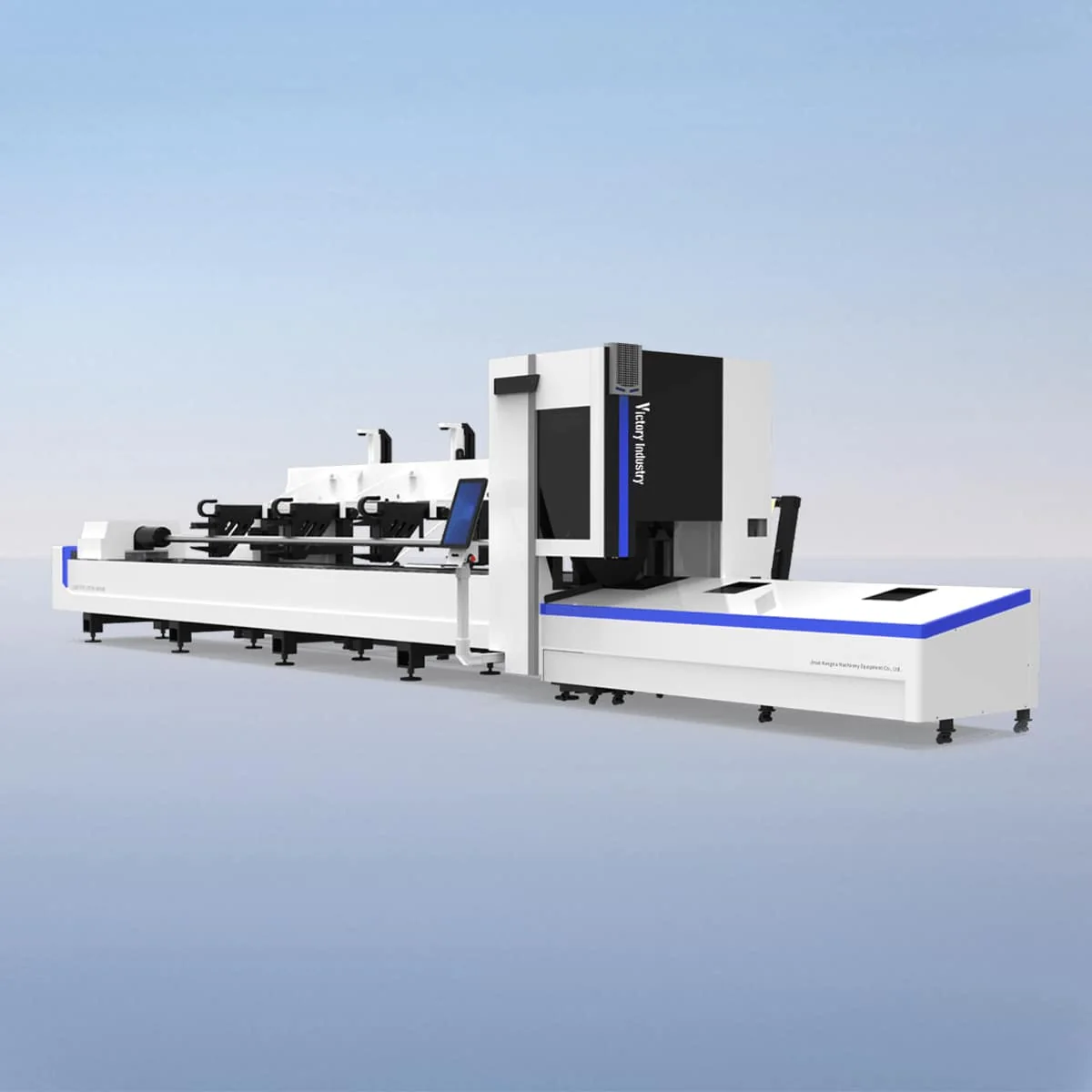
Tube Laser Cutting Machine
VIT-A6035 tube application configuration should track the current drawing and stock specification when a tube project changes. Record what has been revised before comparing equipment offers. A change to section dimensions, material or finished features can alter the question being asked even when the model being discussed remains the same.
VIT-A6035 is listed in the VIT-A tube laser cutting range with a 6000*350mm Cutting Area entry and a 1000-6000W power range. Preserve that area label in the equipment record. Tube diameter, stock length and loading requirements should be stated in the inquiry and confirmed against the actual proposed arrangement.
| Specification | VIT-A6035 |
|---|---|
| Cutting Area | 6000*350mm |
| Laser Head | Raytools, WSX, BOCI, Osprey |
| Laser Power | 1000-6000W |
| Laser Generator | Raycus, MAX, IPG |
| Control System | CypCut, Weihong |
| Servo Motor And Driver | Fuji, Delta, Yaskawa |
| Guide Rails | Taiwan Linear Rails |
| Reducer | Japan Shinbo, France Mortori |
| Max. Acceleration | 0.6G |
| Positioning Accuracy | 0.05mm |
| Repositioning Accuracy | 0.03mm |
Configuration options vary by model. Confirm the final specification, selected components and operating requirements with your quotation.
A revised VIT-A6035 tube project brief should identify the drawing number and revision, then set out section shape, outside dimensions, wall thickness, material and incoming length. Give the quantity and explain which details changed. Keep the current requirements together rather than expecting a supplier to combine several older descriptions.
VIT-A6022 lists 6000*220mm under Cutting Area, compared with 6000*350mm for VIT-A6035. The second entry differs while the first remains the same. Use this as a comparison of published fields, without asserting that it confirms a specific section geometry or loading limit for the revised work.
The VIT-A6035 table lists 0.6G maximum acceleration, Positioning Accuracy of 0.05mm and Repositioning Accuracy of 0.03mm. Keep those entries separate from the finished-part tolerances. They do not give a material cutting rate or validate the result of a revised component drawing.
VIT-A6035 machine options should be compared against a consistent application record. If only the finished features changed, retain the stock description and identify the new drawing. If the section or material changed too, say so explicitly. A previous response should not silently be treated as confirmation of a different requirement.
Describe the intended stock presentation and any unresolved handling responsibilities. Ask the offer to explain its proposed arrangement and included items. Neither the model suffix nor the area entry establishes automatic loading, a particular stock-handling system or the complete scope of an equipment package.
Keep prospective components outside the confirmed current list until their information is available. When another job becomes definite, attach its drawing and stock details as a new requirement. This gives the equipment discussion a clear revision basis without implying that all future work was covered by the first proposal.
VIT-A6035 quotation requirements should identify the selected power and components for the current application. Listed heads are Raytools, WSX, BOCI and Osprey; generators are Raycus, MAX and IPG; controls are CypCut and Weihong. Ask which combination is offered and whether it differs from a previous quotation.
The table also lists Fuji, Delta and Yaskawa drives, Taiwan Linear Rails and Japan Shinbo or France Mortori reducers. Record actual selections so a component change can be distinguished from a drawing change. Several alternative names in a table do not mean all of them form the supplied configuration.
Request current overall equipment dimensions and installation information for the destination, plus a supplied-item list. Keep open application questions with the proposal. The series and comparison-model links support the published parameter review, and the contact page can carry the consolidated current brief rather than disconnected revision notes.
State what changed and attach the current section dimensions, material, wall thickness, stock length and quantity with the new drawing reference.
It is the published Cutting Area entry. Describe the actual tube and incoming length, then ask for the proposed arrangement to be addressed explicitly.
Its Cutting Area is 6000*220mm rather than 6000*350mm. Keep the source label instead of turning the second entry into an unqualified section limit.
List the selected power, head, generator, control and drives in each offer, separately from changes to the workpiece requirements.
They are published equipment parameters. Required part dimensions and tolerances should be supplied on the drawing for a specific application discussion.
Compare VIT-A Laser Cutting Machine models
Share your material, dimensions and process. Start a conversation about the right configuration.